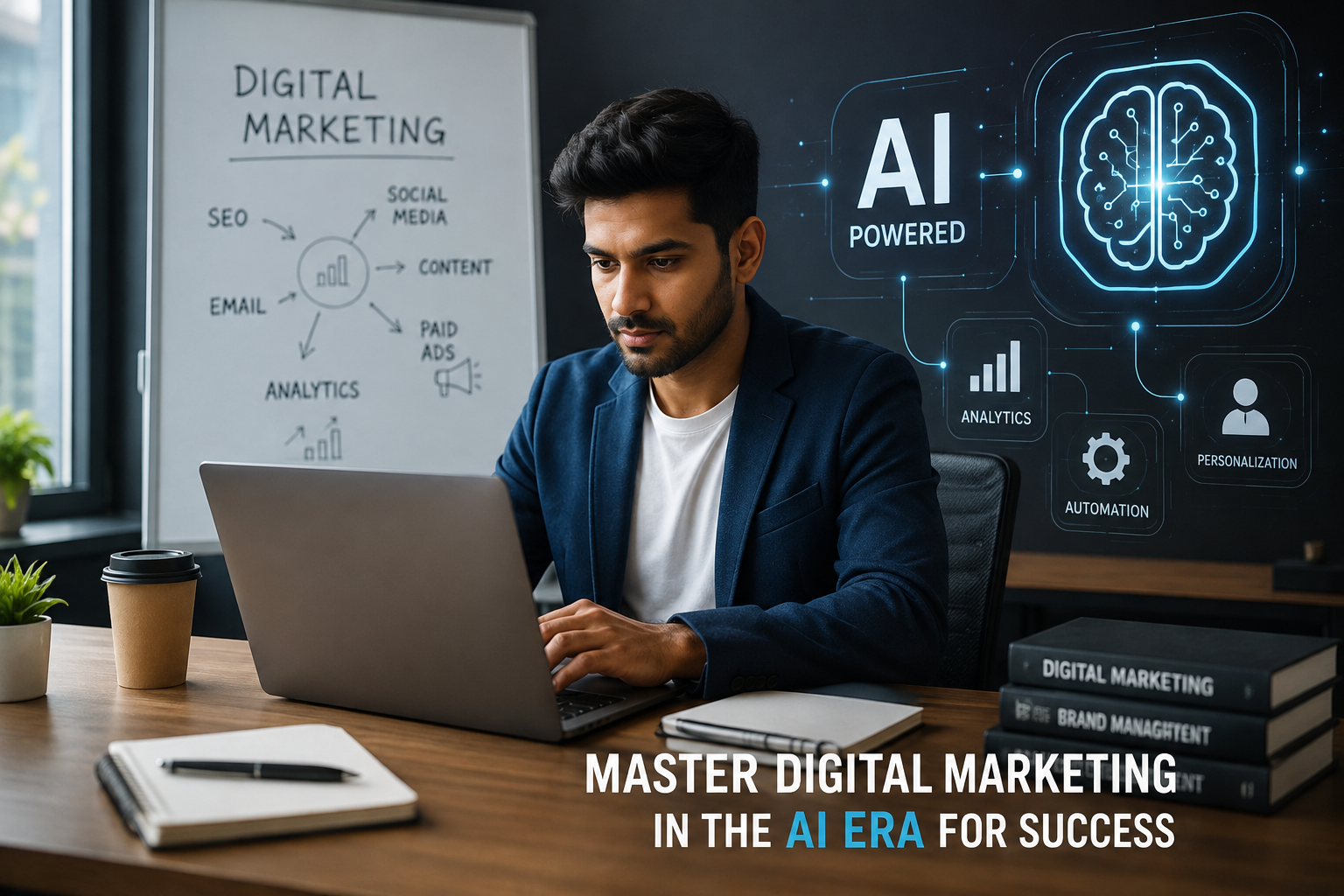
Artificial intelligence (AI) is reshaping how businesses plan, execute, and optimise marketing campaigns by replacing guesswork with data-driven decision-making. Instead of relying on static audience assumptions or delayed reporting, marketers can now act on real-time insights that improve efficiency and return on investment (ROI). From targeting and personalisation to automation and attribution, AI enhances nearly every stage of the marketing lifecycle. Professionals looking to build practical expertise in this space can explore AI marketing and automation training at JDM Courses to understand how these tools are applied in real-world campaigns. As digital competition increases, AI is becoming a core requirement for scalable and profitable marketing strategies.
Smarter Audience Targeting and Segmentation
AI significantly improves audience targeting by moving beyond basic demographics into behavioural and intent-based segmentation. Traditional approaches might group users by age or location, but AI analyses deeper signals such as browsing patterns, purchase history, content engagement, and time-on-site behaviour.
Machine learning models continuously identify micro-segments that reflect real user intent. This allows marketers to deliver highly relevant messaging to audiences who are most likely to convert, reducing wasted ad spend and increasing ROI.
For example, instead of targeting a broad category like “small business owners,” AI might isolate users actively researching CRM software or comparing marketing automation platforms. These refined segments ensure campaigns are more precise, timely, and effective.
Personalisation at Scale
One of AI’s most valuable contributions to marketing performance is its ability to deliver personalisation at scale. Rather than manually building multiple campaign variations, AI dynamically adjusts content based on user behaviour and preferences.
This includes personalised emails, product recommendations, landing pages, and ad creatives. AI systems evaluate user data in real time and adapt messaging to match individual interests, improving engagement rates across channels.
For instance, an online learning provider may show different course recommendations depending on whether a visitor is new or returning. Businesses aiming to strengthen these capabilities can benefit from digital marketing and AI implementation courses at JDM Courses to learn how personalisation engines are built and deployed effectively.
The result is a more relevant customer experience, stronger brand interaction, and improved conversion performance.
Campaign Optimisation and Automation
AI-driven automation transforms how campaigns are managed by continuously monitoring performance and making real-time adjustments. Instead of waiting for weekly reports, marketers can rely on systems that automatically optimise bidding strategies, audience targeting, and creative delivery.
In paid advertising, AI reallocates budgets toward high-performing ads while reducing spend on underperforming ones. It can also test multiple variations simultaneously, quickly identifying the most effective combinations.
Automation reduces manual workload across repetitive tasks such as A/B testing, performance reporting, and bid management. This allows marketing teams to focus more on strategy, creative development, and customer experience design.
Over time, these incremental optimisations compound, resulting in more consistent performance improvements and stronger ROI across all channels.
Predictive Analytics and Smarter Budget Allocation
AI enhances decision-making through predictive analytics, which uses historical data to forecast future outcomes. Instead of reacting to past performance, marketers can anticipate which strategies are likely to succeed.
These insights help allocate budgets more effectively across channels such as search, social media, and display advertising. Campaigns can be prioritised based on predicted return rather than guesswork.
AI can also estimate customer lifetime value, enabling businesses to focus on high-value audiences and reduce inefficient acquisition spending. This predictive approach minimises risk while improving overall campaign efficiency.
By understanding which actions are likely to deliver the highest returns, marketers can make more confident and strategic investment decisions.
Creative Performance and Content Optimisation
AI is also transforming creative development by analysing which content elements perform best across different audiences. This includes headlines, visuals, calls-to-action, and ad formats.
Rather than replacing human creativity, AI acts as an optimisation layer that tests and refines creative outputs at scale. It can generate multiple variations of content and identify which versions drive the highest engagement or conversions.
This is especially useful in large campaigns where hundreds of ad variations may be required. AI ensures that testing happens quickly and continuously, improving performance without slowing down production cycles.
As a result, marketing teams can maintain creative quality while benefiting from data-driven refinement that improves campaign outcomes.
Measurement, Attribution, and ROI Tracking
One of the most complex challenges in digital marketing is accurately measuring performance across multiple touchpoints. AI improves attribution modelling by analysing the entire customer journey rather than relying on simplified last-click models.
This allows marketers to understand how different channels contribute to conversions and assign value more accurately. The result is clearer insight into which strategies are driving ROI and which require optimisation.
AI also improves reporting by identifying anomalies, filtering irrelevant noise, and highlighting actionable insights. This leads to faster decision-making and more reliable performance evaluation.
For organisations seeking tailored support in improving campaign measurement and ROI tracking, they can contact the team via the Contact Us page for further guidance.
Conclusion
AI is fundamentally changing how marketing campaigns are built, managed, and evaluated. By improving targeting accuracy, enabling personalisation at scale, automating optimisation, enhancing predictive planning, and refining attribution models, AI directly strengthens both performance and ROI. Businesses that invest in understanding and applying these technologies are better positioned to scale efficiently and maintain a competitive advantage in increasingly data-driven markets.